15 Powerful Reasons Why Business Cards Still Matter Today
Introduction to Business Cards in the Digital Age
In today’s highly connected world of apps, emails, and digital contact exchanges, it’s easy to assume that traditional business cards are obsolete. But in truth, they’ve evolved and remain more relevant than ever.
A physical business card still offers something no digital alternative can—a memorable, tangible interaction that establishes credibility and leaves a lasting impression. Whether you’re at a networking event, trade show, or casual meetup, business cards continue to be a vital tool for professionals and entrepreneurs alike.
A Brief History of Business Cards
Business cards have been around for centuries, starting as “visiting cards” among nobility and evolving into powerful marketing tools used by tradesmen, salespeople, and executives. Over time, they’ve transformed in both form and function—from simple black-and-white prints to high-end designs embedded with QR codes and digital chips. If you’d rather watch a short video about business cards; you can do so here
Types of Business Cards
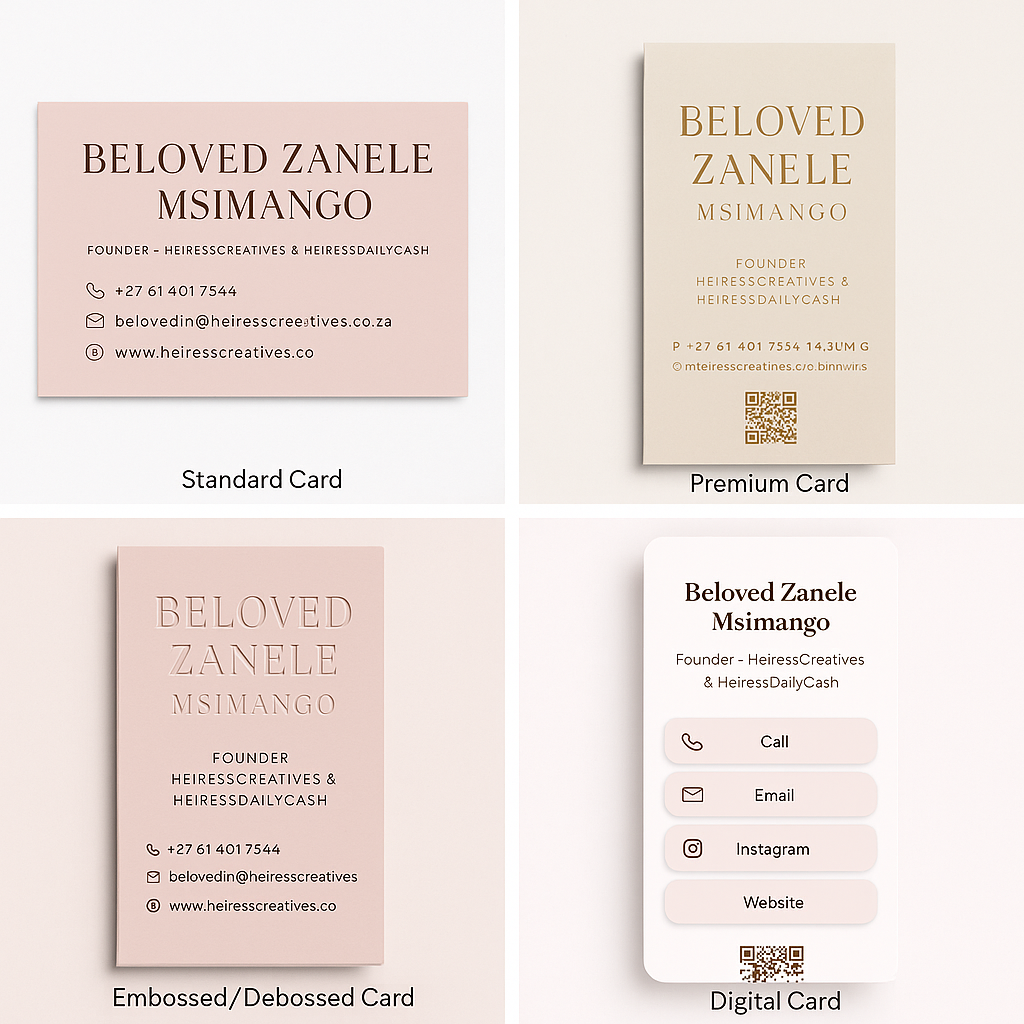
Business cards come in a wide range of formats, each with unique advantages:
| Type | Description |
|---|---|
| Standard | Clean and conventional, easy to carry and distribute |
| Premium | High-end materials, foil stamps, or velvet finishes |
| Embossed/Debossed | Textured surfaces for a tactile feel |
| Digital | App-based cards or PDF versions shared via smartphone |
| NFC/Smart Cards | Contactless technology that shares your info instantly |
Paper vs. Digital Business Cards
Paper business cards still excel at face-to-face engagements, while digital cards are great for quick sharing online. Many professionals use both to cover all networking scenarios.
Why Business Cards Are Still Relevant
Here’s why these small rectangles continue to hold big value:
- Personal connection: They encourage eye contact and real conversation.
- First impressions: A well-designed card instantly signals professionalism.
- Offline reliability: No Wi-Fi or battery needed.
- Branding consistency: A physical reminder of your brand in someone’s hand.
Business Cards as a Branding Tool
Think of your business card as a mini billboard. It showcases your brand colors, logo, tagline, and typography in a compact, shareable format. Every detail—from the font to the finish—reinforces your identity and credibility.
The Psychology Behind Card Design
Design isn’t just aesthetic—it’s strategic. Consider:
- Fonts: Serif for tradition, sans-serif for modernism
- Colors: Blue inspires trust, red grabs attention
- Materials: Thick cardstock feels luxurious; soft-touch adds elegance
All these elements subtly influence how people perceive your brand.
Key Elements of an Effective Business Card
Every card should include:
- Your name and professional title
- Business name and logo
- Phone number and email address
- Website and social links
- Optional QR code for portfolios or contact saving
Common Mistakes to Avoid
- Overloading with text
- Using unreadable fonts or small sizes
- Forgetting to proofread contact information
- Low-quality printing or flimsy materials
Design Tips for Memorable Business Cards
Want your card to stand out? Follow these tips:
- Use finishes like spot UV or embossing for emphasis
- Choose high-contrast colors for readability
- Leave ample white space for a clean look
- Stick to one or two fonts maximum
Industry-Specific Design Ideas
| Industry | Design Tip |
|---|---|
| Tech/Startups | Sleek, minimalist, QR code integration |
| Legal/Finance | Conservative color palette, serif fonts |
| Design/Creative | Bold visuals, custom shapes, texture play |
| Real Estate | Portrait orientation, photo inclusion |
| Fitness/Wellness | Earth tones, organic textures, motivational taglines |
Eco-Friendly Business Cards
If sustainability matters to you and your clients, go green:
- Use recycled or FSC-certified paper
- Choose plant-based inks
- Offer digital versions as an option
- Highlight your eco-consciousness with a subtle badge or message
How to Distribute Business Cards Effectively
- Keep a stash in your wallet or bag
- Share during introductions or after meaningful conversation
- Add to product shipments or thank-you notes
- Leave at cafes, bulletin boards, or co-working spaces.
- Tip: Always hand your card with intention, not randomly.
- To book a consultation click here
Digital Alternatives & Enhancements
Modern business cards can be more than paper. Enhance your card with:
- QR Codes: Link to websites, vCards, portfolios
- NFC Tags: Tap and share instantly
- Augmented Reality: Interactive visuals and demos via apps
These tools blend traditional and digital networking seamlessly.
Build your business foundation with the Palladium Starter Kit.
Business Card Printing Services: What to Look For ?
When choosing a printer:
- Prioritize paper quality and print resolution
- Look for custom options like foil, embossing, rounded corners
- Check delivery times and reviews
- Use tools like Vistaprint, Moo, or Canva Print for DIY designs
Cost of Business Cards: Budgeting & ROI
Business cards remain one of the most affordable marketing tools. Basic cards can cost $10–$30 per 100, while high-end designs may reach $100+. Still, just one card can lead to a valuable contact or deal—offering excellent return on investment.
FAQs About Business Cards
1. Are business cards still used today?
Yes! They remain essential for networking, branding, and face-to-face interactions.
2. What should go on a business card?
Name, title, company, contact info, logo, and possibly a QR code.
3. Should I print or go digital?
Both! Printed cards for in-person settings, digital for convenience and eco-friendliness.
4. How many cards should I carry?
Always keep at least 5–10 with you. Refill regularly.
5. Can I design a business card myself?
Yes, platforms like Canva, Adobe Express, and Vistaprint offer easy-to-use tools.
6. Do business cards really make a difference?
Absolutely—they enhance brand recognition and foster stronger personal connections.
Conclusion: Are Business Cards Still Worth It?
Absolutely. Business cards aren’t just pieces of paper—they’re conversation starters, branding tools, and mini-representations of your professionalism. Whether traditional or tech-enhanced, they offer a simple yet powerful way to connect in a world where personal attention is rare.
Don’t underestimate the impact of a handshake followed by a well-crafted card—it could be the start of your next big opportunity.
Your message has been sent
